Questions First-Generation Students Should Ask Colleges
Practical questions first-generation students can ask colleges about support, costs, academics, belonging, and next steps.
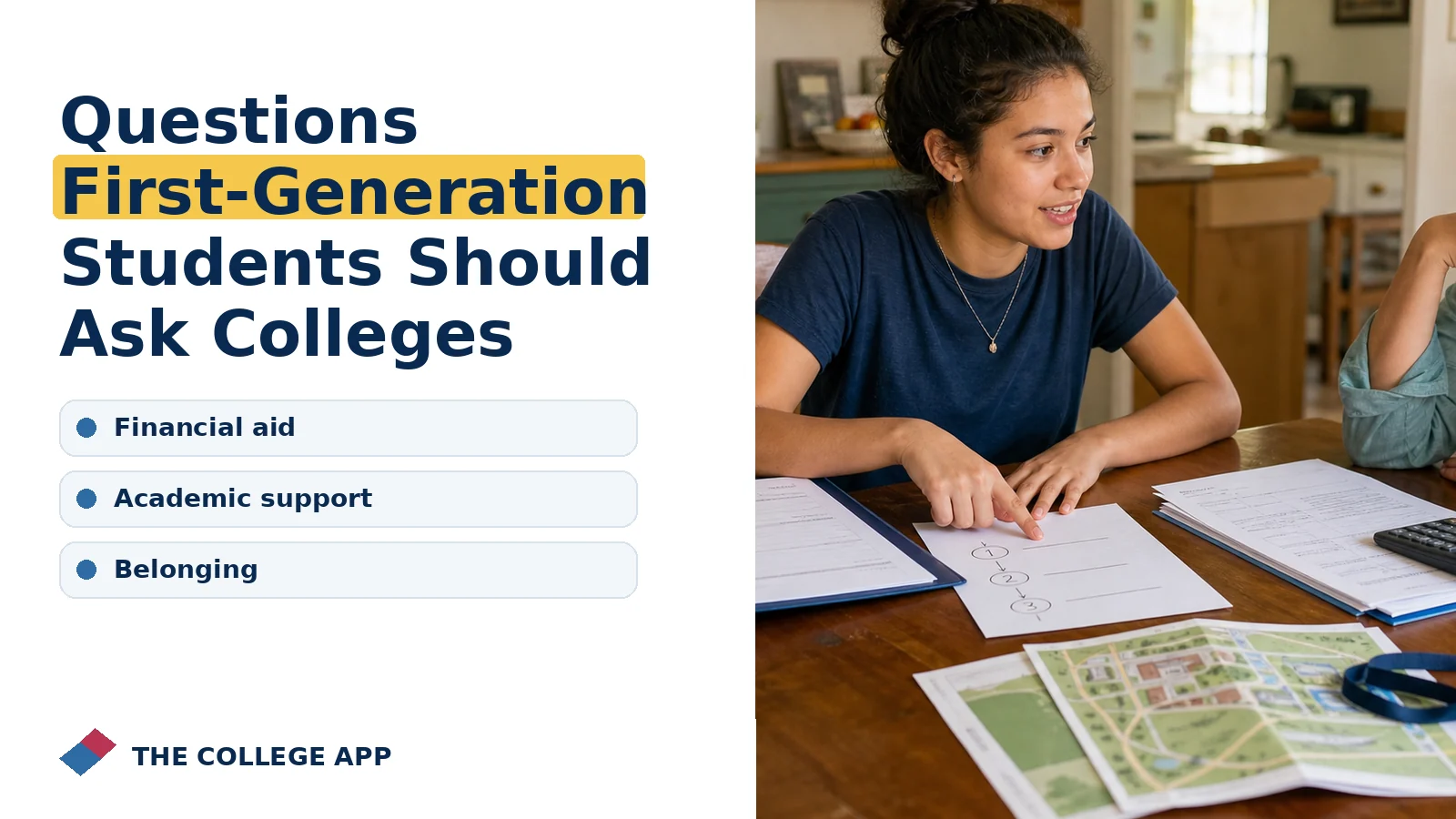
If you are the first in your family to apply to college, you may not know which questions are "normal" to ask. That can make college websites, tours, and admissions emails feel one-sided: the college gives information, and you try to guess what it means for you.
You are allowed to ask direct questions. In fact, asking specific questions is one of the best ways to find colleges that will support you after you arrive, not just recruit you before you apply.
Start With The Support You Would Actually Use
Many colleges say they support first-generation students. The useful follow-up is how that support works in real life.
Ask questions like:
- Is there a first-generation student program or office?
- Who can first-generation students contact when they are confused about college processes?
- Are there summer bridge, orientation, mentoring, or peer leader programs?
- Do first-generation students get help understanding financial aid, course registration, and campus resources?
- Are there events or communities where first-generation students can meet each other?
Listen for details. "We care about every student" is nice, but it does not tell you much. A stronger answer might name a program, staff role, mentorship model, office location, workshop, or student organization.
You do not need to use every support service a college offers. You just want to know whether the help is visible, welcoming, and easy to reach when you need it.
Ask About Advising Before You Need It
Academic advising matters more than many students expect. A good adviser can help you choose classes, understand major requirements, avoid scheduling mistakes, and plan around internships, study abroad, work, or family responsibilities.
Ask:
- How are first-year students assigned advisers?
- How often do students meet with advisers?
- Can students get help choosing classes before their first semester?
- What happens if a student is unsure about a major?
- Are there extra advising resources for students in demanding majors?
- How does a student change majors or add a minor?
If you are interested in a specific major, ask whether students are admitted directly into that major or apply later. Some programs have grade requirements, prerequisite courses, portfolio reviews, auditions, or limited seats. It is better to learn that early than after you have already built your plan around one path.
Get Specific About Cost
Cost can be hard to talk about, especially if your family is learning the financial aid process for the first time. Still, college is a major financial decision. You deserve clear answers. Review Federal Student Aid before your meeting so you can separate federal aid questions from college-specific ones.
Ask the financial aid office:
- What is the best way to estimate my real cost before applying?
- Does the college meet full demonstrated financial need?
- Are scholarships renewed automatically, or do students need to meet certain requirements?
- Which fees are not obvious from the main tuition page?
- How do work-study jobs work on this campus?
- When will I receive my financial aid offer?
- Who can help my family understand the aid offer after admission?
Ask about indirect costs too. Books, transportation, health insurance, course materials, housing deposits, winter break housing, and lab fees can affect your budget. If you will commute, ask about parking and transit. If you will live on campus, ask what happens when residence halls close during breaks.
Do not feel embarrassed asking financial questions. Colleges expect them. A clear financial aid office should be able to explain next steps without making you feel like you should already know the vocabulary.
Find Out What Belonging Looks Like
College fit is not only academics and price. You also need to know whether you can picture yourself asking for help, joining communities, and building a life there.
Try questions like:
- What do students do on weekends?
- Are there cultural centers, identity-based organizations, or student groups that matter to me?
- How easy is it for first-year students to join clubs or activities?
- Are there spaces where students from similar backgrounds connect?
- How does the college support students who live far from home?
- What resources exist for students who feel isolated or overwhelmed?
If you visit campus, notice the answer beyond the official tour. Look at bulletin boards, student center spaces, dining halls, library study areas, and the way students talk to each other. You are not trying to judge a campus in one hour. You are collecting clues.
If you cannot visit, ask for virtual student panels, current student contacts, or recordings of first-generation events. A college that wants to support you should be able to help you learn from people who are already there.
Ask What Happens When A Student Struggles
Every student hits a hard week eventually. A course gets confusing. A family issue comes up. A bill is unclear. A roommate situation becomes stressful. The question is not whether challenges happen. The question is whether the college has a clear path for getting help.
Ask:
- If a student is struggling in a class, where should they go first?
- Are tutoring, writing support, and academic coaching free?
- How do students access mental health or counseling services?
- What emergency financial support exists for unexpected expenses?
- Is there a food pantry, textbook support, or basic needs office?
- Who helps students who are thinking about leaving or taking time off?
Strong colleges will not pretend students never struggle. They will tell you what support exists, how to access it, and when students should reach out.
Use A Simple Question Framework
Before a tour, admissions meeting, college fair, or email, build your questions from four categories. This keeps you from only asking broad questions like "Do you support students?"
Use this framework:
- Access: How do I find the resource?
- People: Who helps me if I have questions?
- Timing: When should I use this resource?
- Details: What does the support actually include?
For example, instead of asking, "Do you have advising?" ask:
- How do first-year students schedule advising appointments?
- Who helps students choose first-semester classes?
- When do students meet with advisers before registration?
- What support is available if I am undecided or thinking about changing majors?
Instead of asking, "Do you help first-generation students?" ask:
- Is there a first-generation student program?
- Who runs it?
- When do students first hear about it?
- What mentoring, events, or workshops does it offer?
The clearer your question, the more useful the answer will be.
Decide Where To Ask Each Question
You do not have to ask every question to the same person. Different offices know different things.
Ask admissions about:
- Application requirements
- Campus visits
- Student life basics
- Connecting with current students
- General first-year programs
Ask financial aid about:
- Aid forms and deadlines
- Scholarships and renewal rules
- Estimated cost
- Work-study
- Comparing aid offers
Ask academic departments about:
- Major requirements
- Research or internship options
- Course sequencing
- Direct admission or competitive entry
- Career paths for that major
Ask student support offices about:
- First-generation programs
- Tutoring and coaching
- Counseling and wellness
- Disability accommodations
- Basic needs support
If you are not sure where to start, admissions can usually route your question. You can also use ColleGPT in The College App to turn a concern into a clear email draft or make a short question list before a campus visit.
Keep Notes After Each Conversation
After you talk with a college, write down what you learned while it is still fresh. You do not need a long summary.
Use this note format:
- College:
- Person or office I contacted:
- Question I asked:
- Answer I received:
- Follow-up I still need:
- What this tells me about fit:
These notes help you compare colleges later. They can also help with essays because you will have specific details about why a college fits your needs and goals.
Pay attention to how the college responds. Did the person answer clearly? Did they send you to a useful office? Did they make the process feel less confusing? That experience is information too.
Questions Are A Sign That You Are Taking This Seriously
Being first-generation does not mean you are behind. It means you may need to learn college systems that other students have heard about at home for years. Asking questions is how you close that gap.
Choose three questions before your next college conversation: one about support, one about cost, and one about academics or belonging. Then write down the answers. A college that fits you well should make it easier to understand your next step, not harder.