Student Aid Index Explained
Learn what the Student Aid Index means, where to find it, and how colleges use it when building financial aid offers.
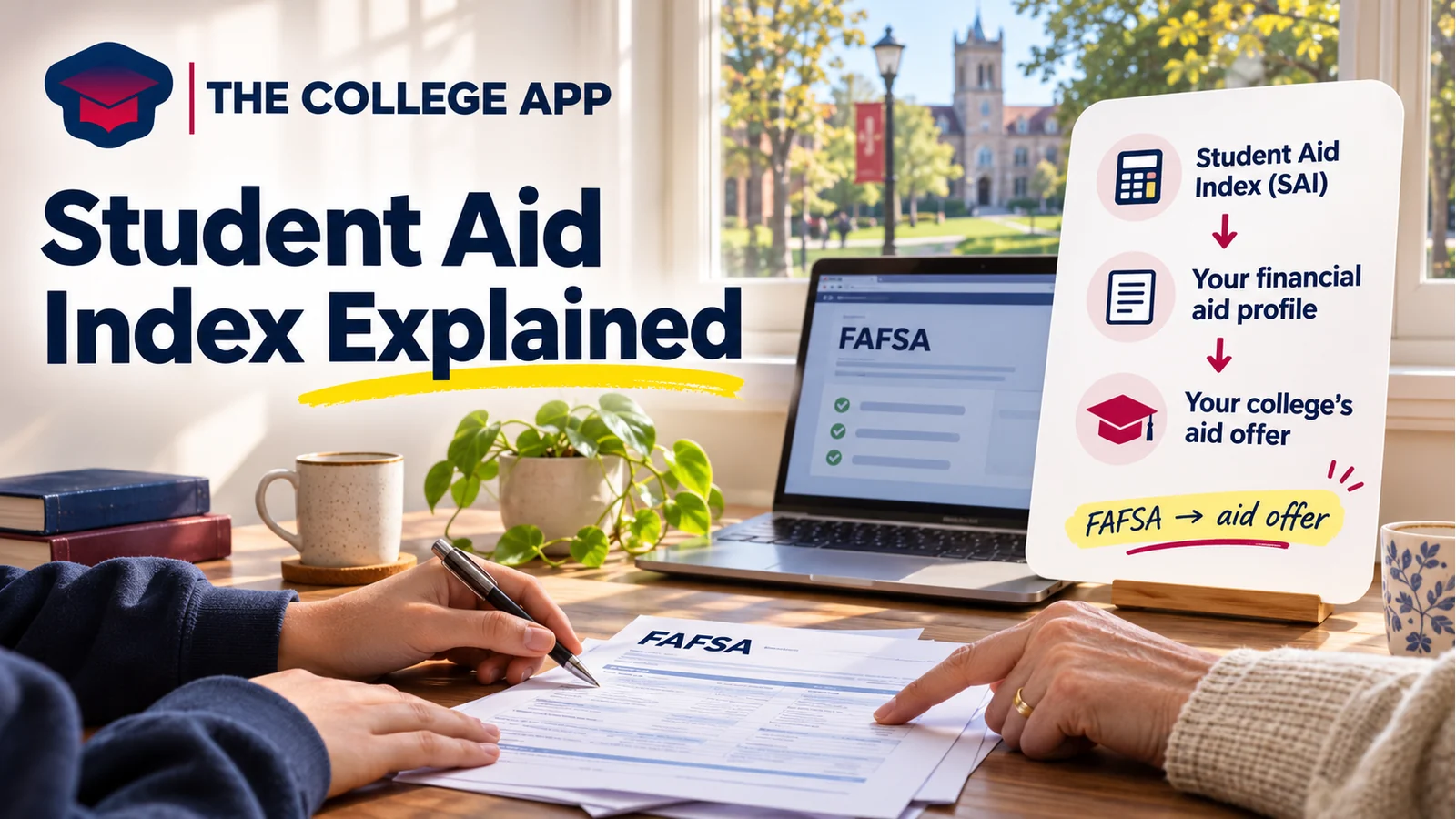
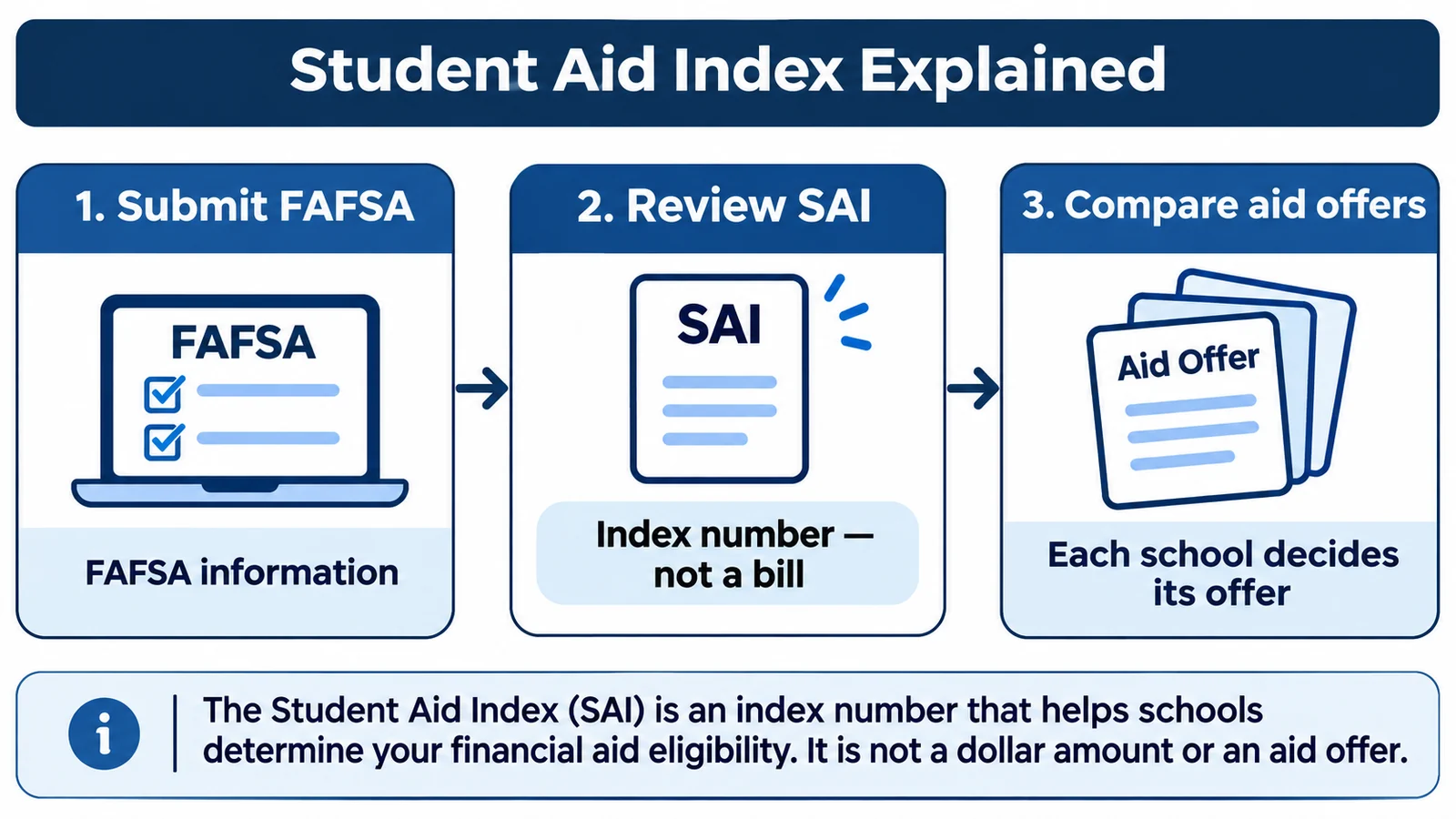
If your FAFSA Submission Summary shows a number labeled “Student Aid Index,” do not read it as a bill. The SAI is an index calculated from your FAFSA information that colleges use as one input when determining your need-based aid.
The number can feel confusing because it is not the same as your financial aid offer, your net price, or the amount your family must pay. Here is how to interpret it and what to do next.
What the Student Aid Index means
The Student Aid Index, or SAI, is a formula-based index number calculated from information on your FAFSA form. Federal Student Aid explains that it can range from -1500 to 999999. A lower SAI generally indicates greater financial need; a negative SAI indicates higher financial need.
The SAI is not:
- A dollar amount your family is expected to pay
- A financial aid offer
- A guarantee of a specific grant, scholarship, or loan amount
- A final estimate of what a particular college will cost you
The name changed from Expected Family Contribution, but the SAI is not simply a renamed bill. It is an index used in the aid process. The school still makes the final decision about the aid it offers, based on its cost of attendance, your FAFSA information, the types of aid available, and other school policies.
Read Federal Student Aid’s SAI explanation for the federal definition and examples.
How the SAI fits into the aid process
Think of the process as a sequence rather than a single calculation:
- You and any required contributors submit the FAFSA.
- Federal Student Aid processes the form and creates a FAFSA Submission Summary.
- The summary includes your confirmed SAI and other eligibility information.
- A college uses your FAFSA information, SAI, and its cost of attendance to assess financial need.
- After you are admitted, the college sends its own financial aid offer.
The federal formula is only part of the picture. Colleges may have institutional aid with their own eligibility rules, and two schools can offer different packages to the same student. That is why the SAI should help you understand your aid profile, not replace a careful comparison of actual offers.
Where to find your SAI
Your official SAI appears after your FAFSA is processed. Federal Student Aid says you can find it in your online FAFSA Submission Summary by:
- Signing in to your StudentAid.gov account
- Opening your processed FAFSA submission under My Activity
- Selecting View FAFSA Submission Summary
- Looking for the Student Aid Index card in the Eligibility Overview tab
Your FAFSA confirmation page may show an estimated SAI first. Treat that estimate as an early signal, then review the processed summary for the confirmed number. Keep the summary for your records and check the answers you submitted.
If something is wrong, use the correction process described in Federal Student Aid’s FAFSA Submission Summary guidance. An incorrect answer can affect the information used in your SAI, so do not ignore a mismatch in income, family information, contributor details, or other responses.
What to do if your SAI seems wrong
Start with the FAFSA Submission Summary rather than guessing what the number should be. Use this short review:
- Check your answers: Compare the summary with the information you intended to report.
- Check required contributors: Make sure each required contributor completed the requested steps.
- Submit a correction if needed: Follow the online correction instructions when an answer is inaccurate.
- Ask the financial aid office: Contact a college directly if you have an unusual family circumstance or cannot explain the result.
- Keep documentation: Save the summary, correction confirmation, and messages from the school.
Some situations require a conversation with a financial aid professional. A school may be able to review special financial circumstances through its own process, but do not assume an adjustment will be automatic. Ask what documentation it needs and when to submit it.
How to use the SAI when comparing colleges
The SAI becomes more useful when you pair it with each school’s real costs and aid offer. For every college, record:
- Published cost of attendance, including tuition, fees, housing, food, books, transportation, and other listed expenses
- Grants and scholarships that do not need to be repaid
- Work-study or employment assumptions
- Federal or private loans, including whether they are subsidized or unsubsidized
- The remaining amount your family would need to cover
- Renewal conditions for each grant or scholarship
Do not compare schools by looking only at the total “aid” number. A package with more aid can still leave you with higher out-of-pocket costs if more of the package is loans or if the college’s cost of attendance is higher. Federal Student Aid’s aid-offer evaluation guide recommends reviewing costs and aid by type before deciding.
Common SAI questions
Does a lower SAI guarantee more aid?
No. A lower SAI generally signals greater financial need, but it does not guarantee a specific amount or type of aid. Eligibility also depends on the program, the school’s cost of attendance, available funds, enrollment, and other requirements.
Is my SAI the amount I owe?
No. It is an index number, not a bill. Wait for a financial aid offer from each college and calculate the remaining cost using the offer’s actual grants, scholarships, work-study, and loans.
Can my SAI change?
Yes. The SAI is calculated from the FAFSA information for that application year. If your answers change, you submit a correction, or the law and formula change for a later year, the result can be different. Review each new FAFSA Submission Summary rather than carrying an old number forward.
Should I apply for aid if I think my family earns too much?
If you want to be considered for federal, state, or college aid, complete the FAFSA and follow the relevant deadlines. You cannot know how a school will evaluate your eligibility from income alone, and many colleges use FAFSA information in their own aid processes.

Your next step
Find your FAFSA Submission Summary, locate the confirmed SAI, and verify that the answers are accurate. Then wait for each college’s financial aid offer and compare the actual cost left after grants and scholarships. If you still have questions, contact the school’s financial aid office with the summary in front of you. ColleGPT can also help you organize questions about the process, but use StudentAid.gov and each college’s financial aid office for official decisions.